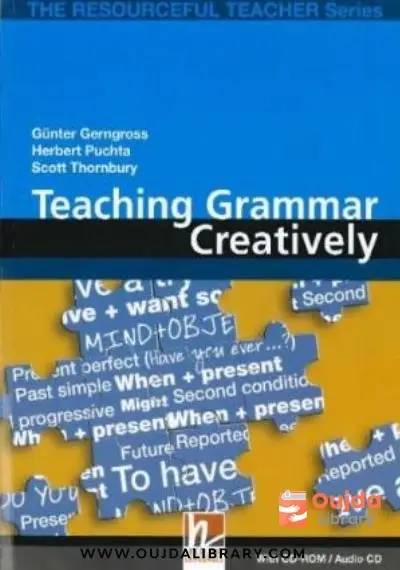
TEACHING GRAMMAR CREATIVELY
Book Link is Given Below:
Grammar forms the backbone of any language, providing structure and clarity to communication. However, for many students, traditional grammar instruction can feel rigid, boring, or overly complex. This is where the concept of Teaching Grammar Creatively becomes invaluable. By incorporating innovative methods, activities, and practical applications, educators can make grammar lessons both enjoyable and effective, fostering a lifelong love for language learning.
Why Teaching Grammar Creatively Matters
Traditional grammar instruction often relies on memorization of rules, repetitive exercises, and worksheets. While this approach has its merits, it may not engage students fully, especially young learners or those struggling with the subject. Teaching Grammar Creatively introduces alternative strategies that stimulate curiosity, critical thinking, and practical application.
Creative grammar teaching encourages students to interact with language in meaningful ways. It transforms abstract rules into tangible learning experiences, helping students internalize concepts rather than simply memorizing them. As a result, students are more likely to retain knowledge, apply it correctly, and gain confidence in their writing and speaking abilities.
Key Strategies for Teaching Grammar Creatively
There are numerous approaches to implement Teaching Grammar Creatively, ranging from interactive games to project-based learning. Here are some of the most effective strategies:
- Storytelling and Writing Prompts: Encourage students to create stories or personal narratives that incorporate specific grammar structures. This method allows learners to practice grammar in context, making rules more memorable.
- Grammar Games: Board games, card games, or digital apps can turn grammar exercises into fun, competitive challenges. Games like “Sentence Scramble” or “Grammar Bingo” engage students while reinforcing learning objectives.
- Role-Playing and Dramatization: Acting out dialogues or scenarios provides a dynamic environment to practice verb tenses, sentence structures, and punctuation. Role-playing helps students internalize grammar rules through real-life applications.
- Visual Aids and Infographics: Using charts, diagrams, and colorful illustrations can simplify complex grammar concepts. Visual aids appeal to different learning styles, making abstract rules easier to understand and remember.
- Music and Rhymes: Songs, rhymes, and chants are excellent tools for teaching grammar creatively. Rhythm and repetition enhance memory retention and make learning more enjoyable.
- Collaborative Projects: Group activities, such as creating magazines, posters, or videos, encourage students to use grammar actively while collaborating with peers. This hands-on approach promotes both creativity and teamwork.
Benefits of Creative Grammar Teaching
Implementing Teaching Grammar Creatively in classrooms offers multiple advantages:
- Improved Retention: Active participation helps students remember grammar rules more effectively.
- Enhanced Engagement: Fun and interactive methods maintain attention and motivation.
- Practical Application: Students learn to use grammar correctly in real-life contexts, improving communication skills.
- Critical Thinking and Problem Solving: Creative exercises challenge learners to analyze, apply, and manipulate language structures.
- Confidence Building: Success in creative activities boosts self-esteem and encourages students to express themselves freely.
By combining creativity with instruction, grammar becomes less intimidating and more accessible to learners of all levels.
How to Incorporate Teaching Grammar Creatively in Classrooms
To make Teaching Grammar Creatively effective, educators should consider the following steps:
- Identify Learning Objectives: Determine the specific grammar points to teach and align creative activities accordingly.
- Use a Variety of Methods: Rotate activities, combining games, storytelling, visual aids, and collaborative projects to cater to different learning styles.
- Provide Clear Instructions: Even in creative exercises, students need clear guidance to focus on learning outcomes.
- Encourage Reflection: After activities, ask students to discuss or write about what they learned to reinforce understanding.
- Assess Progress: Incorporate informal assessments, such as peer review or self-assessment, to track comprehension and improvement.
A well-structured plan ensures that creativity enhances learning rather than distracting from it.
Resources for Teaching Grammar Creatively
For teachers seeking materials, PDF guides and activity books on Teaching Grammar Creatively are excellent resources. These materials often include ready-to-use lesson plans, worksheets, games, and project ideas, saving preparation time while offering innovative strategies to enrich grammar instruction. Utilizing such resources can help educators implement creative techniques confidently and effectively.
Conclusion
Teaching Grammar Creatively transforms language learning from a tedious task into an engaging and meaningful experience. By combining storytelling, games, visual aids, music, and collaborative projects, educators can help students internalize grammar rules, improve communication skills, and enjoy the learning process.
Whether used in traditional classrooms, online settings, or homeschool environments, creative grammar teaching equips learners with the tools to succeed academically and express themselves confidently. Embracing creativity in grammar instruction not only enhances comprehension but also fosters a lifelong appreciation for language.
Disclaimer: The content of this article is provided for educational and informational purposes only. PDF resources on Teaching Grammar Creatively are intended for personal and educational use. All copyrights and intellectual property rights belong to their respective owners. No copyrighted material is distributed for commercial purposes via this website.
Comments (0)